

Gum Disease in Austin: Warning Signs You Should Not Ignore
Gum disease is a bacterial infection of the gum tissue that progresses from mild inflammation to bone and tooth loss if left untreated, and its earliest warning signs are easy to miss without knowing what to look for. Noticing a little blood when you brush or floss is easy to dismiss, but it is often the first sign of gum disease Austin dentists see every day. This guide walks through the warning signs worth paying attention to, what causes them, and how our team helps patients catch gum disease before it becomes a bigger problem.
Gum Disease Austin: Why It Is Easy to Miss the Early Signs
Gum disease is a bacterial infection of the gum tissue that can progress from mild inflammation (gingivitis) to bone and tooth loss (periodontitis) if left untreated. It is one of the most common health conditions affecting adults, and it rarely announces itself.
Gum disease often develops without pain, which is exactly why so many patients miss it until it is advanced. According to the CDC, nearly 42% of U.S. adults age 30 and older have some form of periodontal disease, and severe cases affect about 8% of that group. Most of that damage starts quietly, with inflammation that builds for months before it becomes obvious.
Bacteria in plaque irritate the gum tissue first. If plaque is not removed through daily brushing and flossing, it hardens into tartar, and the irritation deepens. That is when gums start to bleed, swell, or pull away from the teeth — the signals most patients finally notice and book an appointment over.
The Early Warning Signs of Gum Disease to Know
Early-Stage Signs (Gingivitis)
- Gums that bleed when you brush or floss, even gently
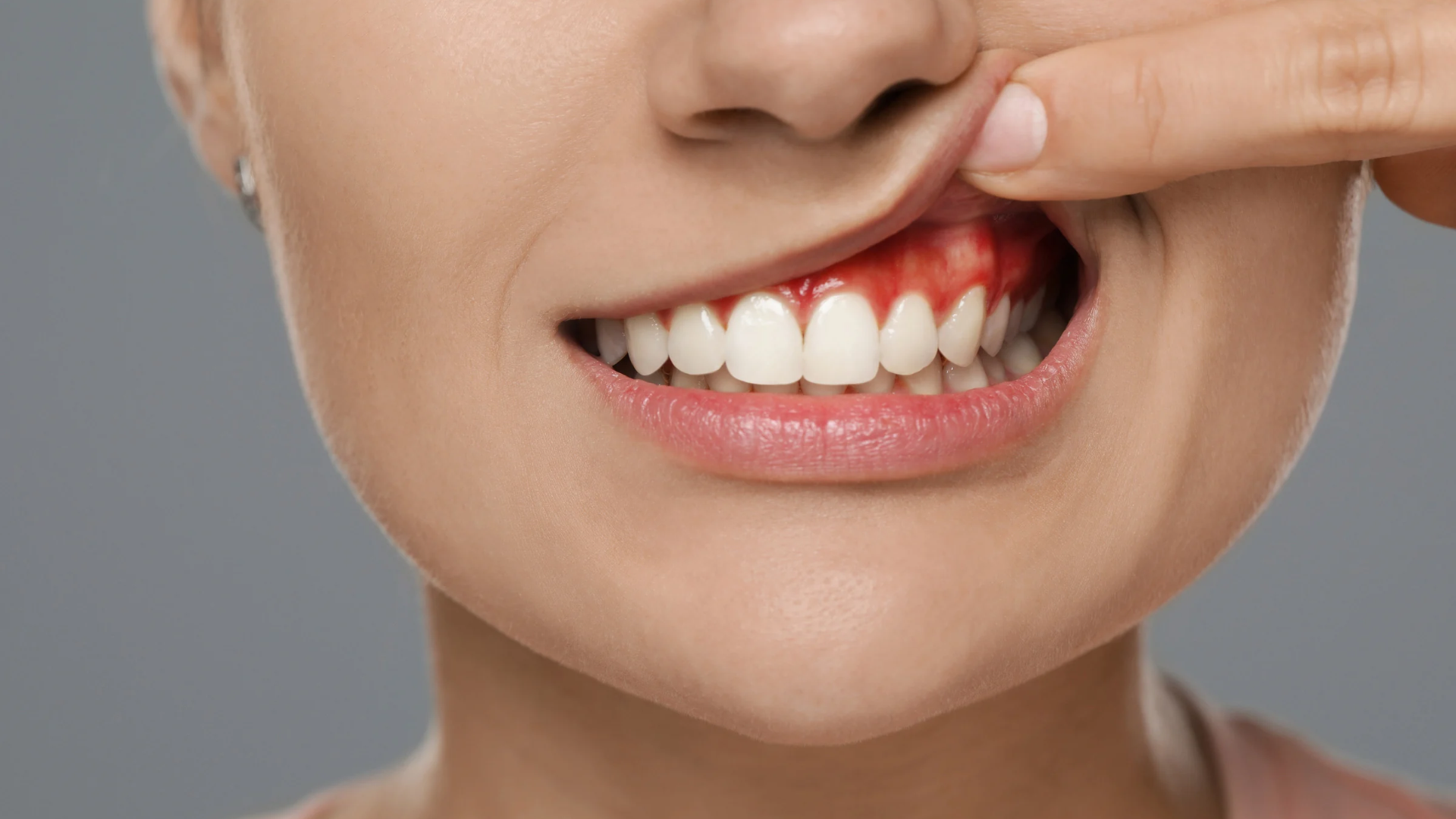
- Gums that look red, puffy, or tender to the touch
- Persistent bad breath that does not go away after brushing
- A metallic taste that lingers between meals
These early signs of gum disease point to gingivitis, the mildest and most reversible stage. Catching it here usually means a deeper cleaning and a better home routine can turn things around before any lasting damage sets in.
Signs of Advanced Gum Disease (Periodontitis)
- Gums that have visibly pulled away from your teeth
- Teeth that feel loose or have shifted position
- Pus or discharge between your teeth and gums
- Changes in how your teeth fit together when you bite down
Once gum disease reaches this stage, it is called periodontitis, and it involves the bone holding your teeth in place, not just the surrounding tissue. We cover the full range of periodontal disease symptoms and treatments in our top questions on periodontitis, but the signs above are the ones that should move a visit to the top of your priority list.
What Causes Gum Disease in the First Place
Plaque buildup is the root cause behind nearly every case, but a handful of factors make it worse. Smoking, uncontrolled diabetes, hormonal changes, and certain medications that dry out your mouth can all speed up how quickly gum disease develops, according to NIDCR's overview of periodontal disease. Genetics plays a role, too. Some patients develop gum disease despite a solid home care routine simply because they are more susceptible.
How Gum Disease Affects More Than Your Smile
The inflammation caused by gum disease does not always stay in your mouth. NIDCR-supported research has traced connections between periodontal disease and several systemic conditions, including cardiovascular disease, stroke, and complications with diabetes.
The relationship works both ways. Diabetes can make gum disease harder to control, and gum disease can make blood sugar harder to manage. If you are already managing a chronic condition, treating gum disease early is not just about protecting your teeth.
How Our Team Approaches Gum Disease in Austin
At Austin Elite Smiles, serving patients across Avery Ranch, Cedar Park, and North Austin, our board-certified periodontist, Dr. Chad Orlich, works alongside our general dentistry team to treat gum disease at every stage, from early gingivitis to more advanced periodontitis. Treatment starts with a straightforward evaluation of your gum health, followed by a plan built around what your mouth actually needs.
For many patients, that means a professional deep cleaning paired with better home care. For others, we recommend Perio Protect, a comfortable at-home tray system that delivers medication below the gumline between office visits. You can read more about our full range of options on our preventive dentistry page.
We know putting off a dental visit is common, especially once gum disease has progressed. Our team takes a no-judgment approach to every consultation. You are not the first patient to walk in worried about what we'll find, and getting ahead of it now is easier than waiting.
Gum Disease Austin Patients Can Treat Successfully With Early Care
The earlier you act on any of the signs above, the more treatment options stay on the table. Waiting rarely makes gum disease easier to manage, and in most cases, it just means a longer road back to healthy gums.
If you have noticed bleeding, swelling, persistent bad breath, or any shift in how your teeth fit together, these are signs that should move a visit to the top of your priority list. Patients enrolled in our Smile Wellness Plan also receive a discount on Perio Protect treatment, which can make ongoing care more manageable. Call us at 512-866-3800 or schedule online to get started.
Frequently Asked Questions
1. Why are my gums bleeding when I brush?
Bleeding when you brush usually means plaque has built up along your gumline and irritated the tissue. it is one of the earliest signs of gum disease, and it typically clears up once plaque is removed through a professional cleaning and a more consistent home routine.
2. Is it normal for gums to bleed?
Occasional bleeding after switching toothbrushes or flossing more aggressively than usual can happen, but bleeding that shows up regularly is not something to brush off. If it continues for more than a week or two, it is worth having your gums checked.
3. What are the early signs of gum disease?
The earliest signs include gums that bleed easily, look red or swollen, feel tender, or come with persistent bad breath. These point to gingivitis, which is reversible with the right care.
4. When should I see a dentist for bleeding gums?
Book a visit if bleeding continues for more than a couple of weeks, if it is accompanied by swelling or pain, or if you notice any looseness in your teeth. Catching it at this stage keeps your treatment options simpler.
5. Can gum disease come back after treatment?
Yes, gum disease can return if plaque and bacteria build back up, which is why ongoing home care and regular cleanings matter even after treatment. Our team monitors your gum health at each visit so we can catch any changes early.
Key Takeaways
- Bleeding, swelling, or tenderness in your gums are early signs worth addressing right away, not symptoms to wait out.
- Persistent bad breath that does not clear up after brushing can point to bacteria below the gumline.
- Gums pulling away from your teeth or teeth that feel loose signal a more advanced stage that needs professional care.
- Smoking, uncontrolled diabetes, and certain medications increase your risk, so managing those factors helps protect your gums too.
- Gum disease has been linked to conditions beyond your mouth, including cardiovascular disease and complications with diabetes.
- Regular cleanings at Austin Elite Smiles and consistent home care remain the most effective ways to prevent gum disease from progressing.