
3D Teeth Model in Austin: Your Digital Dental Blueprint
If you have ever wondered what your dentist actually studies after a scan, the answer is a 3D teeth model in Austin that appears on screen the same day. This post is for North Austin patients who want to understand how that digital blueprint sharpens diagnosis, guides treatment planning, and puts you in control of what comes next.
What Is a 3D Teeth Model?
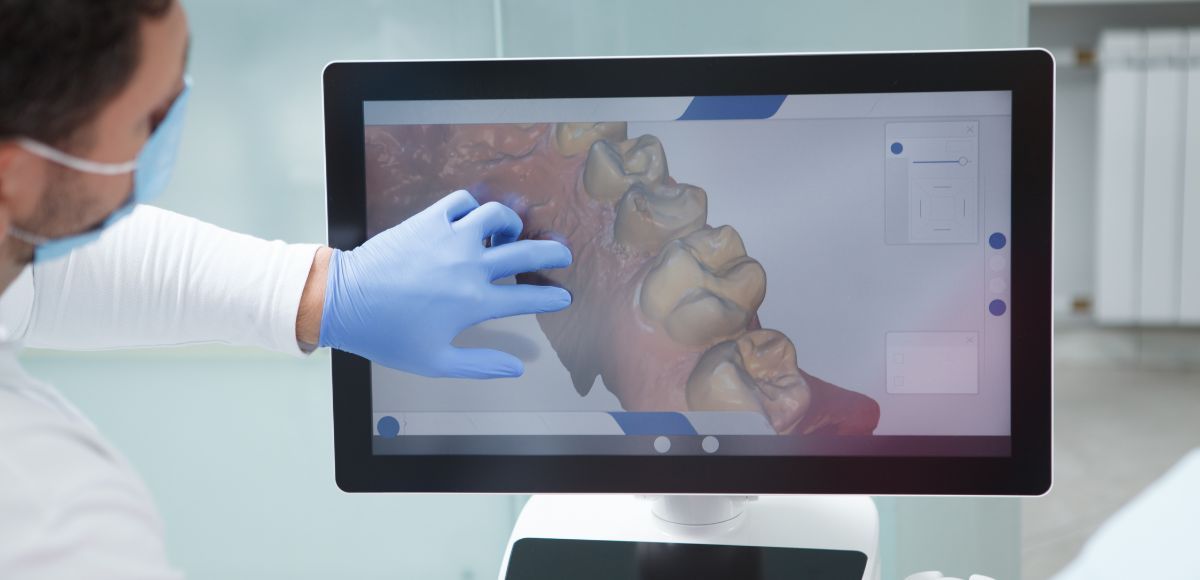
A 3D teeth model is a precise digital replica of your mouth, created from a quick handheld scan and displayed on-screen the same day, so you and your dentist can review your teeth, gums, and bite together in real time. Think of it as a digital twin of your smile that your dentist can rotate, zoom into, and measure down to fractions of a millimeter.
In a single pass, the model records far more than a quick visual exam can:
- The full surface of every tooth, including chips, wear, and hairline cracks
- Your gum line and the contours around each tooth
- How your upper and lower teeth meet when you bite
- The overall shape and spacing of your dental arches
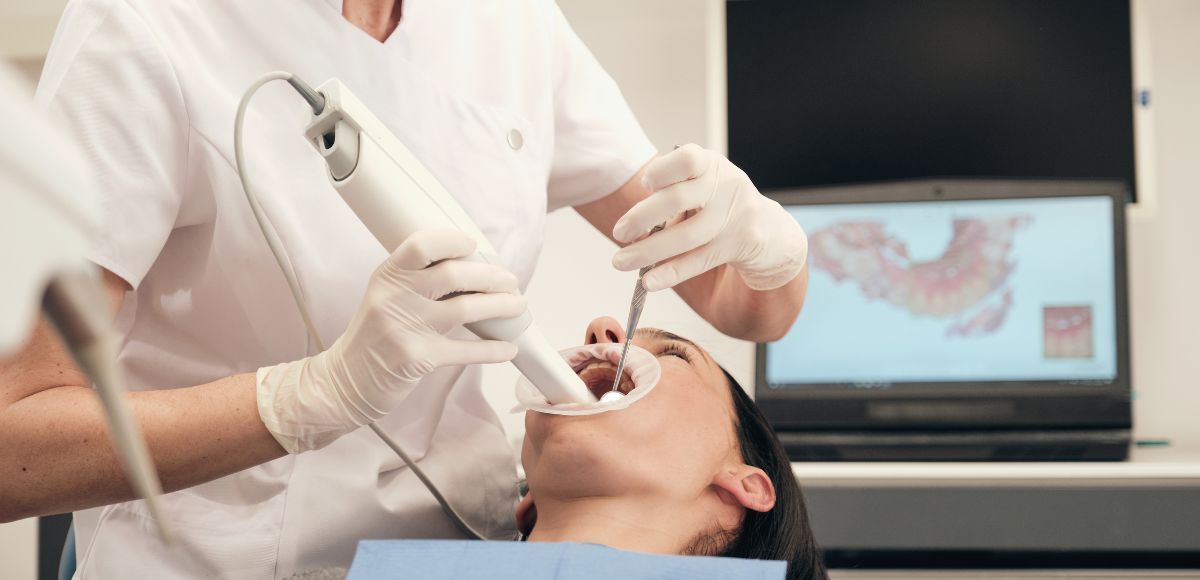
The model comes from a short session with our 3D Dental Wellness Scan, which uses a small handheld wand rather than messy impression material. There is no gagging and no waiting for trays to set. For many patients, the scan feels easier than a routine cleaning.
From Scan to Your 3D Teeth Model Austin Blueprint
The process is faster and calmer than people expect:
- During an intraoral scan, a dentist glides a small handheld scanner across your teeth, capturing thousands of images per second.
- Software stitches those images into a single seamless model in real time, so your smile appears on the screen as the scan progresses.
- The whole capture typically takes just a few minutes, though the exact time varies based on the scope of your visit, with no impression material at any point.
That live view matters. Older approaches relied on flat snapshots, and the patient simply trusted the explanation. Digital dental imaging gives you a shared, rotating picture, and digital dental imaging gives you a shared, rotating picture, adding to the complete record your dentist builds across every preventive visit, so nothing gets missed.
What Your 3D Teeth Model Can Reveal
A full-mouth scan is not just about admiring the shape of your smile. The model surfaces details that a quick look in the mirror, or even a standard exam, can miss.
Because the scan is so precise, it can help flag:
- Early enamel wear and fracture lines that often precede a problem
- Visible surface wear and enamel erosion patterns that may be early indicators of tooth decay, flagged for further evaluation alongside your full dental records
- Gum recession and contour shifts that your dentist can flag for further periodontal evaluation, including potential signs of gum disease
- Crowding, spacing, and tooth position that affect both health and appearance
- Existing fillings or restorations that may be wearing down
Prevention pays off here. Your dentist catches these changes during routine preventative visits. Early problems are simpler to fix. The model works as an early warning system, not just a portrait of your smile.
Treatment Planning That Starts From a Complete Picture
A complete 3D record removes the guesswork. Your dentist bases every decision on measurable data, not a best estimate. That is the real value of reviewing a 3D teeth model in Austin with your dentist before any procedure begins.
With your digital model on screen, your dentist can:
- Measure the exact spacing between teeth and the position of each one
- Check how your bite comes together and where pressure concentrates
- Compare today's scan against earlier ones to track subtle changes over time
- Simulate how a proposed treatment would change your smile before anything begins
You see the same view your dentist sees. That turns the plan from a mystery into a decision you are making together, with the reasoning visible in front of you.
How Your 3D Model Supports Specific Treatments
One scan can support several conversations at once, which spares you the need to repeat appointments and impressions.
Depending on your goals, the same model can guide:
- Alignment: It maps how your teeth will move, so that Invisalign treatment can be simulated and tracked from your first visit.
- Restorations: The exact dimensions ensure a precise fit for porcelain veneers and crowns, as the lab works from a true replica rather than an approximation.
- Subtle refinements: Your dentist plans bonding and contouring against an accurate model of your teeth.
- Ongoing monitoring: Time-lapse comparisons across visits show whether teeth are shifting or wear is progressing.
What You Experience When You See Your Model
Most patients are surprised by how much easier these visits are. Here is the typical flow:
- You sit back while the wand passes over your teeth, with no trays and no biting down on the putty.
- Your smile builds on the screen in front of you within minutes.
- You and your dentist review the model together, rotating and zooming into any area.
- You point to the exact tooth you have been worried about and ask why one area looks different from another.
Seeing it changes the conversation. Wherever you are starting from, the model offers a calm, non-judgmental way to understand your mouth and decide what you want to do about it.
Why Seeing Your 3D Teeth Model in Austin Improves Outcomes
Precision at the start means fewer surprises later. A complete, measurable record changes your results:
- Restorations fit better and need fewer chairside adjustments.
- Alignment results stay more predictable. Your dentist maps the movement in advance.
- Small issues get caught while they are still small and easier to manage.
The bigger benefit is yours, though. You walk in informed, you see what we see, and you make decisions with a clear picture rather than a leap of faith. Starting from an accurate picture means your treatment fits from the beginning, with less guesswork and fewer adjustments along the way.
Ready to See Your Smile the Way We Do?
You do not have to wonder what is happening with your teeth. Reserve a visit and see your own 3D dental model with our team, with no pressure and no judgment about where you are starting from. As an AACD-accredited practice in North Austin, Austin Elite Smiles uses this technology to help you understand your smile before any treatment begins.
Frequently Asked Questions
1. What is a 3D Teeth Model used for?
It gives our team a precise, three-dimensional record of your teeth, gums, and bite. We spot problems early and plan treatments accurately. You see your own mouth in detail. You make informed decisions.
2. How is a 3D tooth model made?
A small handheld scanner passes over your teeth, capturing thousands of images per second. Software combines those images into a single digital model in real time, with no putty trays and no uncomfortable impressions. The capture usually takes only a few minutes.
3. What can a dentist see with a 3D dental model?
The model reveals tooth wear, cracks, spacing, bite alignment, and gum contours in fine detail. It can also show how existing restorations are holding up. Many of these signals are difficult to catch with a quick visual exam alone, which is why the scan supports earlier detection.
4. How does a digital dental blueprint improve treatment?
It replaces estimates with exact measurements. That precision delivers better-fitting restorations, more predictable alignment, and fewer adjustments. Our team plans every step from an accurate replica of your mouth.
5. Is a 3D dental scan in Austin safe?
Yes. The scan uses light and a handheld camera to map your teeth, so it is a comfortable, non-invasive way to capture your smile. Most patients find the digital scan far easier and more comfortable than the older putty impression process.
Key Takeaways
- Ask whether your next visit includes a 3D scan so you can view your own model on-screen as part of your 3D teeth model in Austin visit.
- Name your concerns at the start, like a chip, shifting teeth, or sensitivity. Your dentist reviews the model with those in mind.
- Use the on-screen model to ask questions and understand your options before agreeing to any treatment.
- Request a copy or summary of your scan results to serve as a reference for future visits.
- One scan can support alignment, restoration, and preventative conversations at once, which means fewer repeat impressions.
Keep your prior scans on file, so your team can compare them over time and catch small changes early.eld wand, often called an intraoral scanner. As our team moves it gently across your teeth, it builds a complete digital model in real time.
Here is what that technology actually does:
- Optical, radiation-free capture: the wand reads your mouth with safe LED or laser light, so the scan itself adds zero radiation exposure.
- High-precision capture: detail is recorded at a level of accuracy comparable to traditional impressions for many restorative and alignment uses, particularly in partial-arch applications.
- True color and depth: it records both shape and color, so gum tissue, enamel, and existing dental work are easy to tell apart on screen.
- Powder-free scanning: no chalky coating is sprayed on your teeth first, unlike older scanner systems.
- Open digital file: the model exports cleanly into planning software for clear aligners, crowns, and veneers, so your data flows straight into treatment design.
- Saved for comparison: the file is stored securely and reused to measure changes from one scan to the next.
This kind of digital dental imaging replaces the tray full of impression material that many people remember with a shudder. There is no gag-inducing putty, no tray distortion, and the finished file is ready in minutes. A clearer digital starting point produces a more accurate treatment plan and fewer adjustments down the road.
Step by Step: What Happens During Your Full Mouth 3D Scan
Here is how the appointment usually flows, start to finish:
- Settle in. You take a seat, and a member of our team explains what the scan involves before anything begins.
- Prep the teeth. No spray or powder is needed before the scan begins.
- Scan the outer surfaces. The clinician glides the wand along the cheek-facing side of your upper and lower teeth.
- Capture the inner and biting surfaces. The wand traces the tongue-facing side and the chewing surfaces to complete each arch.
- Record your bite. You close naturally, so the scanner captures exactly how your top and bottom teeth meet.
- Review the model. The finished 3D model appears on the monitor, and we walk through it with you right away.
How a full mouth scan dentist captures your images
The capture itself feels remarkably ordinary. Nothing is sharp, and nothing pinches, so most patients compare it to having photos taken rather than undergoing a procedure.
The whole capture usually takes only a few minutes; you breathe and swallow normally throughout, and your care team can work at your pace throughout. Because the process is optical rather than physical, there is no discomfort during or after the scan.
What the Scan Reveals That a Standard Exam Can Miss
A 3D dental scan in Austin can surface concerns long before they become painful or costly, including:
- Early decay screening signals that guide targeted X-ray review
- Gum recession and changes in tissue height over time
- Wear patterns and small cracks caused by grinding or an uneven bite
- Subtle shifts in alignment that affect how your teeth meet
Catching these signals early is the heart of goodpreventative dental care. The earlier we see a change, the simpler the response. According to the Centers for Disease Control and Prevention, untreated dental problems remain common among adults, which is exactly why a more complete view matters.
How Your Results Shape a Smarter Treatment Plan
Your 3D model becomes the reference point for what follows: monitoring a small spot, planning clear aligners, or designing a restoration that fits the first time.
Because the model is digital, we track it across visits. Comparing this year's scan to last year's reveals movement, wear, or gum changes that no single snapshot would show. That continuity supports long-term care through the Smile Wellness Plan and informs the full range of dental services at Austin Elite Smiles.
Regular visits to Austin Elite Smiles also include a soft-tissue review and the oral cancer screening described by the National Institute of Dental and Craniofacial Research as part of comprehensive care.
Choosing a Full Mouth Scan Dentist in North Austin
Technology only matters in the right hands. Austin Elite Smiles is an AACD-accredited cosmetic and general dental practice serving Avery Ranch, North Austin, and the surrounding 78717 community.
We pair advanced digital tools with a calm, no-judgment approach, so your first visit feels less like an inspection and more like a partnership in your own health.
You stay in the driver's seat the whole way. We show you what we see, explain it plainly, and help you decide what comes next.
Ready to see your own mouth in three dimensions? Schedule your visit at Austin Elite Smiles and start with a complete picture of your oral health.
Frequently Asked Questions
1. What is a full mouth 3D scan?
It is a digital process that uses a handheld optical scanner to capture a detailed three-dimensional model of your teeth, gums, and bite. When you visit a full mouth scan dentist, the result is a precise on-screen view your dental team can study, magnify, and compare over time, which a flat dental X-ray or visual exam cannot provide on its own.
2. How long does a full mouth 3D scan take?
The capture itself usually takes only a few minutes. You can swallow and breathe normally throughout, and your care team can work at your pace if you need a moment.
3. Does a full mouth 3D scan hurt?
No. The scanner glides gently over your teeth, never pinching or poking. Most patients find it more comfortable than the old putty impressions it replaces.
4. What does a 3D dental scan show?
It can surface early decay screening signals, gum recession, enamel wear, small cracks, and shifts in tooth alignment. Seeing these changes early makes them easier and gentler to address.
5. Do I need this scan if I already get regular X-rays?
The scan and X-rays do different jobs. Digital imaging maps the surface and shape of your mouth in three dimensions, while X-rays look beneath the surface at roots and bone. Together, they give a far more complete view than either one alone.
Key Takeaways
- Book your scan at the start of care, so your team has a complete baseline to compare against in future visits.
- Skip the worry about putty trays; the digital wand is quick, comfortable, and mess-free.
- Ask to view your 3D model on screen so you can see any concerns for yourself before deciding on treatment.
- Treat the scan as preventative, not just diagnostic; the earlier a change is spotted, the simpler the fix.
- Keep your scans consistent year to year so subtle movement, wear, or gum changes are caught while they are still small.